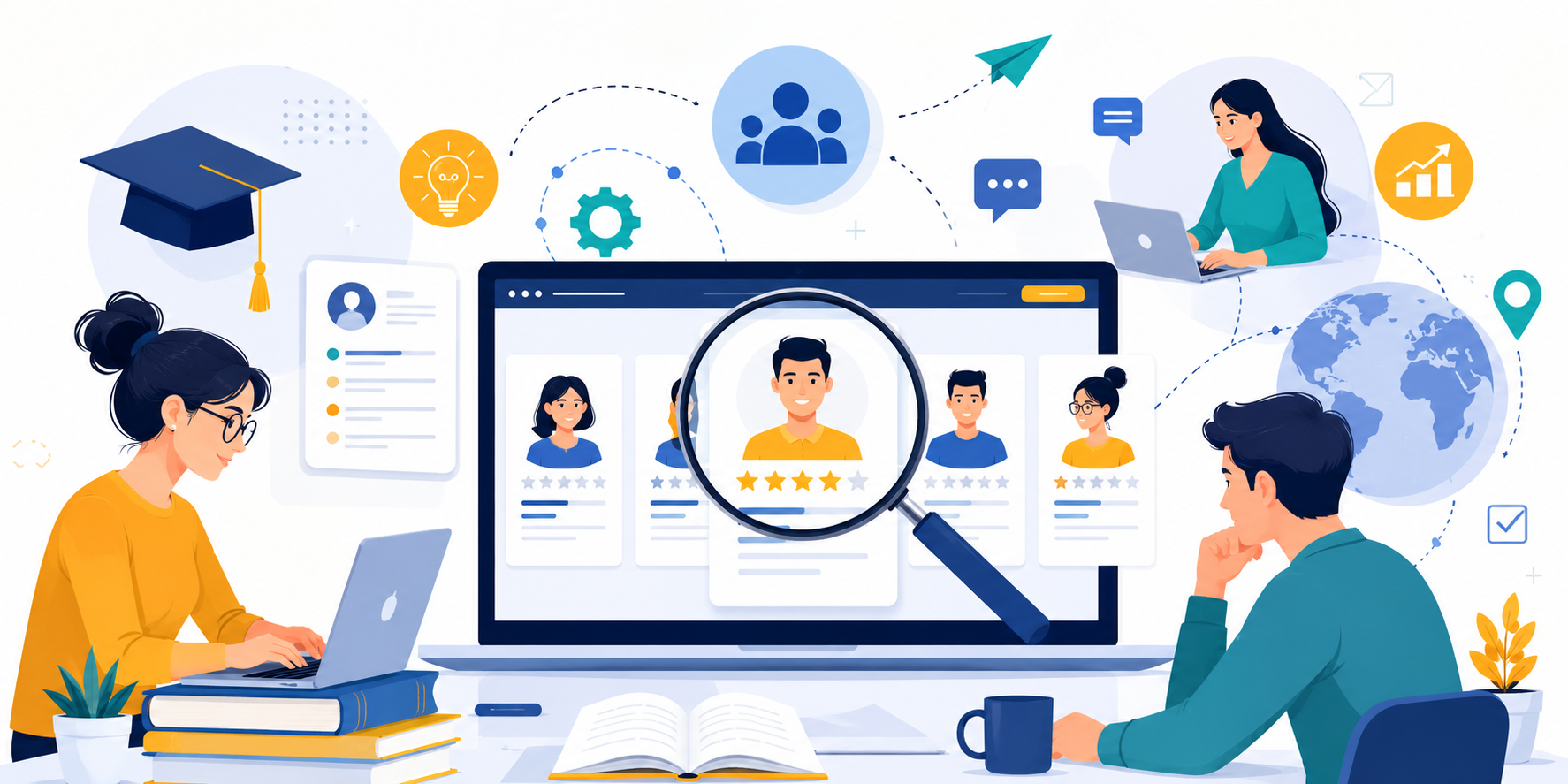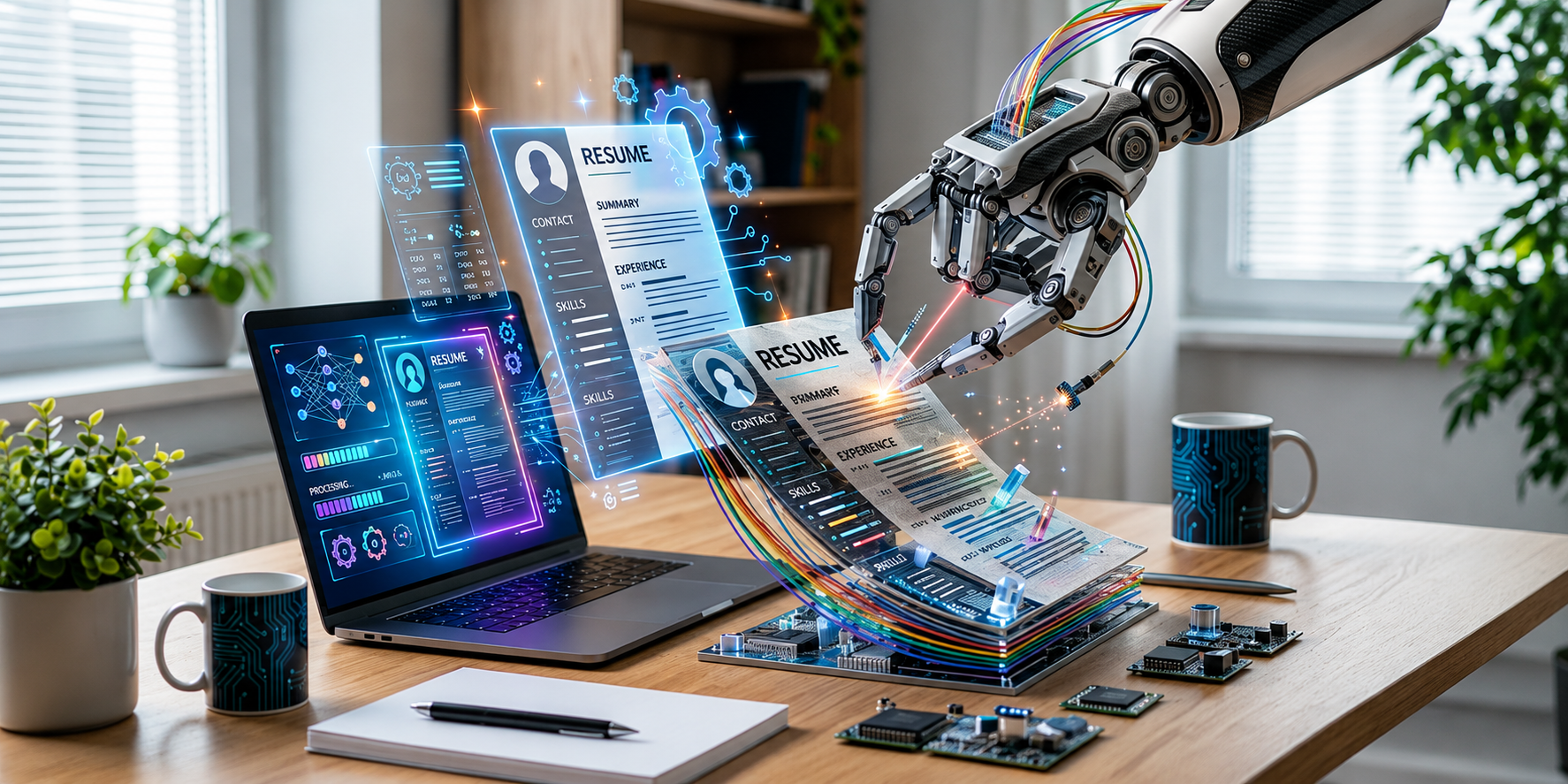


Artificial intelligence has been talked about in recruitment circles for years. But 2026 is the year the conversation finally caught up with reality.
AI adoption in HR doubled in just twelve months — from 26% to 43% globally (SHRM, 2025). In India, over 90% of firms have piloted AI in their HR functions. White-collar hiring grew 9% in the first quarter of 2026 alone. AI-linked job postings are projected to hit 3.8 lakh positions this year — a 32% year-on-year jump.
This isn’t a trend anymore. It’s the new baseline.
But here’s the thing nobody is saying loudly enough: adoption and impact are not the same thing. Only 38% of Indian organisations report high relevance from their AI hiring tools. The rest are running pilots, paying subscriptions, and wondering why the needle hasn’t moved.
In this blog, Xperlo breaks down what’s actually happening with AI in recruitment right now — what’s working, what’s not, what it means for employers, and what job seekers need to understand to stay ahead.
| 43% of HR teams now use AI globally — up from 26% last year | 32% projected growth in AI-linked job postings in India in 2026 | 85% of employers now prioritise skills over degrees |
Where AI in Recruitment Actually Stands in 2026
Let’s cut through the noise. AI in recruitment is no longer experimental — but it is uneven. Large enterprises have moved fast. Mid-sized companies are catching up. Small businesses and startups are still figuring out what’s worth the cost.
The tools themselves have matured significantly. We’ve moved from basic keyword-matching ATS systems to genuine AI agents that can source candidates, screen applications, schedule interviews, and generate offer letter drafts — often without human input at each step.
But maturity of tooling doesn’t equal quality of outcomes. The organisations seeing real ROI from AI hiring are those that have done the harder work of defining what they actually need before reaching for a tool.
What AI Is Doing Well Right Now
- Resume screening at volume: AI can process thousands of applications in minutes, filtering for role-relevant skills and experience far faster than any human team. For high-volume roles, this is genuinely transformative.
- Candidate sourcing: 71% of Indian recruiters now use AI to surface ‘hidden talent’ — candidates who aren’t actively applying but whose profiles match open roles. 80% say it makes candidate discovery meaningfully better.
- Interview scheduling: Automated scheduling eliminates one of the biggest bottlenecks in hiring — the calendar ping-pong between recruiters and candidates. AI coordination tools have cut scheduling delays by up to 60% in enterprise settings.
- Job description optimisation: AI tools now flag biased language, suggest inclusive alternatives, and recommend keyword structures that improve job ad visibility and applicant quality.
- Predictive analytics: Advanced platforms can now forecast which candidates are most likely to succeed in a role based on historical hiring data — reducing mis-hire risk before the first interview even happens.
AI screening tools are only as good as the data they’re trained on. If your historical hiring data reflects past biases — and most organisations’ data does — your AI tool will replicate and potentially amplify those biases at scale. Human oversight isn’t optional; it’s essential.
The Honest Caveat
AI screening tools are only as good as the data they’re trained on. If your historical hiring data reflects past biases — and most organisations’ data does — your AI tool will replicate and potentially amplify those biases at scale. Human oversight isn’t optional; it’s essential.
5 AI-Driven Recruitment Trends You Can’t Ignore in 2026
1. Skills-Based Hiring Is Now the Majority Position
85% of employers globally now prioritise demonstrated skills over academic credentials. In India, companies like Swiggy, PhonePe, and Unacademy have replaced degree requirements with portfolio reviews, live coding assessments, and role-play simulations. AI is the engine enabling this shift — making it practical to evaluate skills at scale rather than defaulting to the CV as a proxy. If your job descriptions still lead with degree requirements, you are actively excluding some of your best potential hires.
2. Agentic AI Is Moving from Pilot to Production
The next generation of recruitment AI isn’t a tool you use — it’s an agent that works alongside you. Agentic AI systems can now handle multi-step workflows: receiving a brief, searching candidate databases, shortlisting, sending outreach messages, scheduling calls, and updating your ATS — all without a human triggering each step. This is the biggest structural shift in recruitment technology in years. Early adopters are seeing sourcing timelines drop from weeks to days.
3. Candidate Experience Is Becoming a Competitive Differentiator
83% of candidates say a negative application experience impacts their perception of a company — and they share those experiences publicly. AI is being used on both sides of this equation: to create faster, more responsive candidate journeys (instant status updates, AI chatbots for FAQ, automated interview prep resources) and, when implemented poorly, to create cold, impersonal processes that damage employer brands. The companies winning on candidate experience in 2026 are using AI to be more human, not less.
4. The Hybrid Workforce Model Is Now Standard
Permanent, contract, and gig talent will coexist as the default workforce structure across most Indian tech and services companies by the end of 2026. AI is enabling this by making it faster to onboard, manage, and off-board contingent workers. For hiring managers, this means your talent acquisition strategy needs to account for multiple workforce types — not just permanent headcount.
5. AI Compliance Is Becoming a Legal Requirement
The EU AI Act classifies recruitment AI as ‘high-risk,’ with enforcement of high-risk requirements beginning August 2026. This is directly relevant for Indian IT services firms and GCCs serving European clients. Requirements include documented risk management, bias testing, data quality controls, and meaningful human oversight. Even outside Europe, India’s own labour laws — including the Constitution’s prohibition on discrimination — mean that AI tools used in hiring carry real legal exposure if not properly governed.
“AI speeds up hiring by 20–30%. But the companies seeing the biggest gains aren’t just using better tools — they’ve built better processes first.”
How to Use AI in Your Recruitment Process — Without Getting It Wrong
Knowing what’s possible with AI is one thing. Knowing how to implement it responsibly — in a way that actually improves outcomes rather than just adding complexity — is another. Here’s the Xperlo framework for AI-assisted hiring:
Start with Process, Not Product
Before evaluating any AI hiring tool, map your current recruitment process end-to-end. Identify where the delays, drop-offs, and quality gaps are. AI should solve a defined problem — not be adopted because a competitor is using it or a vendor gave a compelling demo.
Use AI for Volume, Humans for Judgement
The most effective hiring processes in 2026 use AI at the top of the funnel — screening CVs, sourcing candidates, scheduling screens — and bring human judgment in for competency assessment, culture evaluation, and final decisions. The moment you delegate final hiring decisions to an algorithm without genuine human review, you introduce both ethical and legal risk.
Audit for Bias Before You Scale
Before rolling out any AI screening tool at scale, run a bias audit. Test whether the tool produces different outcomes for candidates with equivalent skills but different demographic characteristics. If it does — and many do — you need to either fix the tool or limit its use until it can be fixed.
Be Transparent with Candidates
Candidates increasingly want to know if AI is being used in their assessment. Being upfront about how AI is used in your process — and providing a clear path to human review — builds trust and protects you legally. It also tends to attract the kind of candidates who are comfortable with technology, which is often exactly who you want.
Measure What Actually Matters
- Time-to-fill: Is AI actually reducing it — and by how much?
- Quality of hire: Are AI-screened candidates performing better or worse at 6 months vs. previous cohorts?
- Drop-off rates: Is AI communication improving or worsening candidate experience?
- Diversity metrics: Is AI expanding or narrowing your talent pool?
What AI in Recruitment Means for You as a Candidate
If you’re actively job hunting — or planning to be — understanding how AI is used in recruitment isn’t just interesting. It’s essential. Here’s what you need to know to navigate an AI-assisted hiring process and come out ahead.
Your CV Is Being Read by an Algorithm First
The majority of applications now pass through an ATS before a human ever sees them. These systems parse your CV for keywords, formatting, and role-specific signals. A beautiful designed PDF with columns and graphics may look great on screen — but it can fail to parse correctly and get filtered out before anyone reads a word.
- What to do: Use a clean, single-column format. Mirror the exact language from the job description. If they say ‘React.js’, write ‘React.js’ — not just ‘React’. Use standard section headings like ‘Experience’, ‘Skills’, and ‘Education’.
Skills Now Outweigh Degrees — Use That
The shift to skills-based hiring is one of the best things to happen to non-traditional candidates in years. If you have demonstrable skills — through projects, certifications, bootcamps, freelance work, or open-source contributions — those now carry real weight, even without a tier-1 college degree.
- What to do: Build a portfolio. Put your work on GitHub. Get relevant certifications. Frame your experience in terms of outcomes and impact, not just job titles.
AI Chatbots Are Part of the Process Now
Many companies use AI chatbots for initial screening — asking structured questions, assessing communication, and sometimes running preliminary technical assessments. These aren’t humans, but your responses are being scored and passed to a recruiter.
- What to do: Treat every stage of the process professionally — even automated ones. Answer clearly, specifically, and with examples. Vague answers score poorly across the board.
Speed Is a Signal — Use It
AI tools have made it possible for hiring teams to move faster than ever. Which means the window between application and outreach, and between outreach and offer, has compressed. Slow responses from candidates are increasingly disqualifying — not because recruiters are impatient, but because the next qualified candidate is only a message away.
- What to do: Check your email and LinkedIn daily during an active job search. Respond to recruiter messages within the same business day. Have your availability for calls and interviews ready to share immediately.
“AI hasn’t replaced the need for great candidates. It’s just raised the bar for how clearly you communicate your value — and how quickly.”
AI Recruitment in India: The Opportunity and the Reality
India’s talent market in 2026 is one of the most dynamic in the world. White-collar hiring grew 9% in March 2026 — the strongest growth in three years. GCC (Global Capability Centre) workforces are expected to exceed 2 million employees this year. The IT-software and services sector holds the largest share of AI-linked roles at 37%, followed by BFSI at 15.8%.
Asia-Pacific — driven heavily by India — is the fastest-growing region for AI recruitment technology, with a 7.01% CAGR. But the technology is arriving faster than the process maturity to use it well.
What’s Working in the Indian Market
- AI-powered sourcing is dramatically expanding the talent pool beyond the metro cities — surfacing strong candidates in Tier 2 and Tier 3 cities who were previously invisible to national employers.
- Skills-based assessments are reducing the over-reliance on IIT/IIM pedigree that has historically excluded large sections of capable talent.
- Multilingual AI tools are beginning to enable assessment in regional languages — a significant development for roles that don’t require English fluency.
What Still Needs Work
- Data quality: Many Indian companies’ historical hiring data is incomplete, inconsistently structured, or reflects legacy biases — making AI tools that learn from that data unreliable.
- Recruiter upskilling: AI tools are only as effective as the people using them. There is a significant skills gap in understanding how to configure, evaluate, and govern AI hiring systems.
- Candidate awareness: Many Indian job seekers don’t know their applications are being screened by AI — and therefore aren’t optimising for it. This creates a disadvantage for strong candidates who simply don’t know the rules have changed.
Final Thoughts
AI is not coming for recruiters’ jobs. It’s coming for the parts of recruiting that should never have required human time in the first place — the manual CV sorting, the calendar scheduling, the status update emails. When those tasks are automated, recruiters are freed to do what they do best: build relationships, exercise judgment, and find the human signal in a sea of data.
For employers, the imperative is clear: stop evaluating AI tools on demos and start evaluating them on outcomes. Define what good hiring looks like, measure it rigorously, and use AI where it genuinely moves the needle.
For candidates, the message is equally clear: the rules of job hunting have changed. Your CV is being read by an algorithm before it’s read by a person. Your skills matter more than your degree. Your responsiveness is being tracked. Understanding these dynamics doesn’t give you an unfair advantage — it just puts you on an even footing with candidates who already know.
At Xperlo, we sit at the intersection of technology and talent. We use AI where it makes the process faster and smarter. We use human expertise where it makes the outcome better. And we never lose sight of the fact that behind every hiring decision is a person’s career — and behind every open role is a team’s future.
Ready to Hire Smarter in 2026?
Whether you’re scaling a tech team or taking your next career step, Xperlo combines AI-powered sourcing with expert human judgment to get results.
FAQs
Q: Is AI replacing recruiters in 2026?
A: No, AI is automating repetitive, high-volume tasks like CV screening, scheduling, and status updates. But the strategic and relational elements of recruiting — evaluating cultural fit, negotiating offers, building candidate trust — still require human expertise. The best recruiting teams in 2026 are using AI to do more with less, not replacing headcount.
Q: How does AI screen CVs — and how do I optimise for it?
A: AI CV screening tools (ATS) parse your resume for keywords, formatting signals, and role-specific experience. To optimise: use a clean single-column format, mirror the exact language from the job description, use standard section headings, and quantify your achievements wherever possible. Avoid tables, columns, and graphics that ATS systems can’t parse correctly.
Q: Is skills-based hiring really replacing degree requirements in India?
A: Yes, significantly. 85% of employers globally now prioritise demonstrated skills over academic credentials, and the trend is accelerating in India’s tech, fintech, and startup sectors. Companies like Swiggy and PhonePe have already made the shift. This is good news for candidates who have built skills through non-traditional paths.
Q: What are the risks of using AI in hiring?
A: The primary risks are bias amplification (AI learns from historical data that may reflect past discrimination), loss of candidate experience quality (overly automated processes feel cold and impersonal), and legal compliance exposure (particularly for companies serving EU clients under the AI Act). Human oversight, bias auditing, and transparent communication with candidates are the key mitigations.
Q: How is Xperlo using AI in its recruitment process?
A: Xperlo uses AI as a precision sourcing layer — to surface candidates who match a client’s brief faster, and to eliminate administrative bottlenecks in early-stage coordination. Every shortlisted candidate is reviewed by a human consultant before being presented to a client. We believe technology should accelerate the process; people should make the call.
Q: What should job seekers in India know about AI hiring tools?
A: Three things: First, your CV is likely being screened by an algorithm before a human sees it — optimise accordingly. Second, skills and proof-of-work now matter more than your college name. Third, responsiveness is being tracked — slow replies can cost you opportunities in a fast-moving AI-assisted hiring pipeline.